Start carving
Thinking of having a go?
Coming along
We're not a class and we don't teach. We're a group of woodcarvers who meet one evening a week to carve and share experience and ideas, and newcomers are welcome to join in.
Please get in touch before your first visit so we know to expect you. You're very welcome to come along just to watch and chat before deciding whether woodcarving is for you.
Members are asked to sign the club's waiver and follow our health and safety policy and club rules. You can read them all on the resources page.
The club doesn't lend tools, so if you'd like to carve on the evening, bring your own. Members are always happy to show you what they use and talk about what's worth buying.
Next meeting: Wednesday, 7 October 2026, 19:00 – 21:30, at Frant Village Hall.
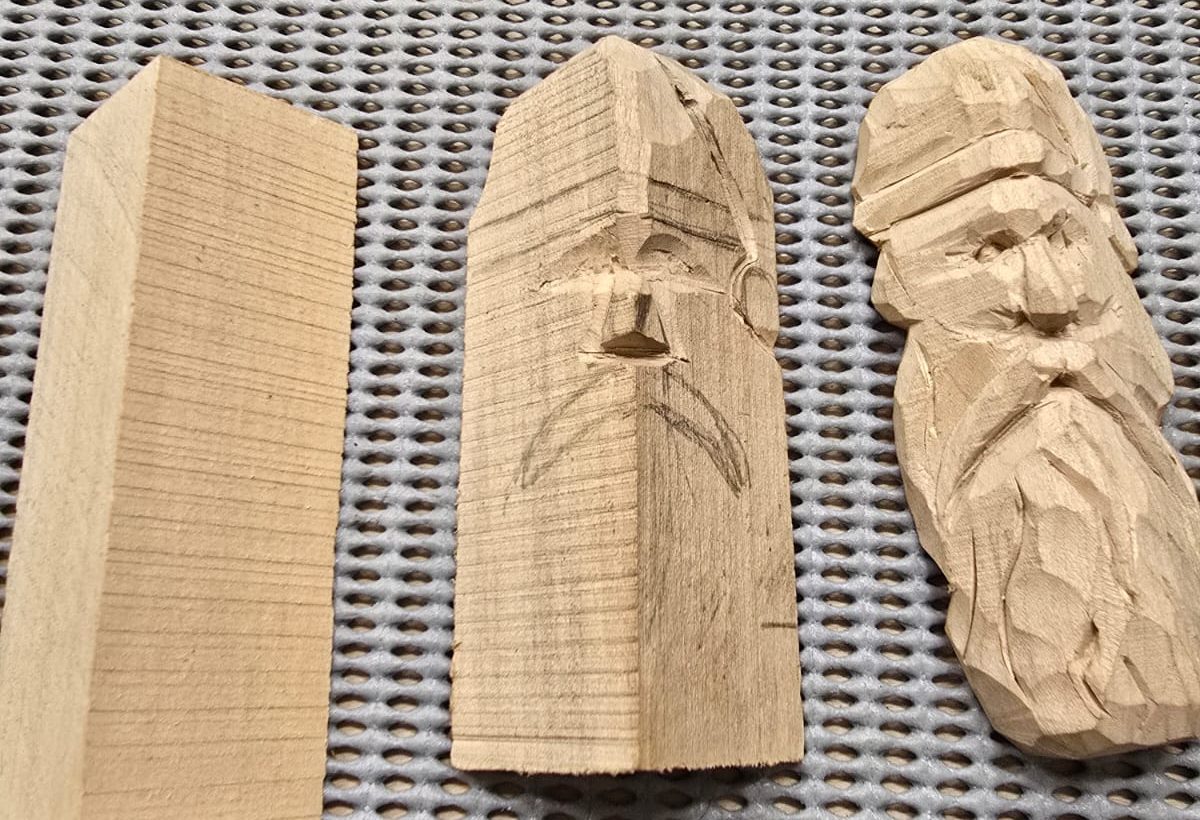
A simple starter kit
You don't need much to begin. This is enough for small whittling projects; gouges and a bench can come later if you get the bug.
- A fixed-blade carving knife
- One good knife is enough to start whittling. Fixed blades are safer than folding ones because they can't close on your fingers.
- A cut-resistant glove
- Worn on the hand that holds the wood. It won't stop a determined stab, but it saves a lot of nicks.
- A thumb guard or tape
- For the thumb you push against when making controlled cuts towards yourself.
- A leather strop and honing compound
- A sharp knife is a safe knife. A few strokes on the strop every so often keeps the edge keen.
- Lime wood
- Lime is the classic carving timber: soft, even and forgiving. Small blocks are ideal for a first project.
- A pencil
- For sketching the shape on the block before you cut.
Staying safe
- Keep your tools sharp. Blunt tools need more force and are far more likely to slip.
- Know where the edge will go if it slips, and keep hands and body out of that path.
- Never try to catch a falling knife or gouge. Step back and let it drop.
- When using gouges, fix the work with a clamp or bench hook so both hands stay behind the edge.
- Take breaks. Most cuts happen when you're tired or rushing.
This is general advice, not instruction. Everyone who carves with us is responsible for their own tools and their own safety.
Learning at home
Free resources our members recommend for learning woodcarving between meetings.
- Doug Linker (YouTube)Friendly whittling tutorials that start from the very beginning. A good place to learn basic knife cuts.
- Chris Pye's Woodcarving WorkshopsA British master woodcarver's lessons on traditional carving with gouges, sharpening, and projects for beginners upwards, now free on YouTube.
- Members’ wisdomNotes from our own woodcarvers: Bill Gingell on sharpening and controlling the cut, John Freake on caricatures and wood spirits.